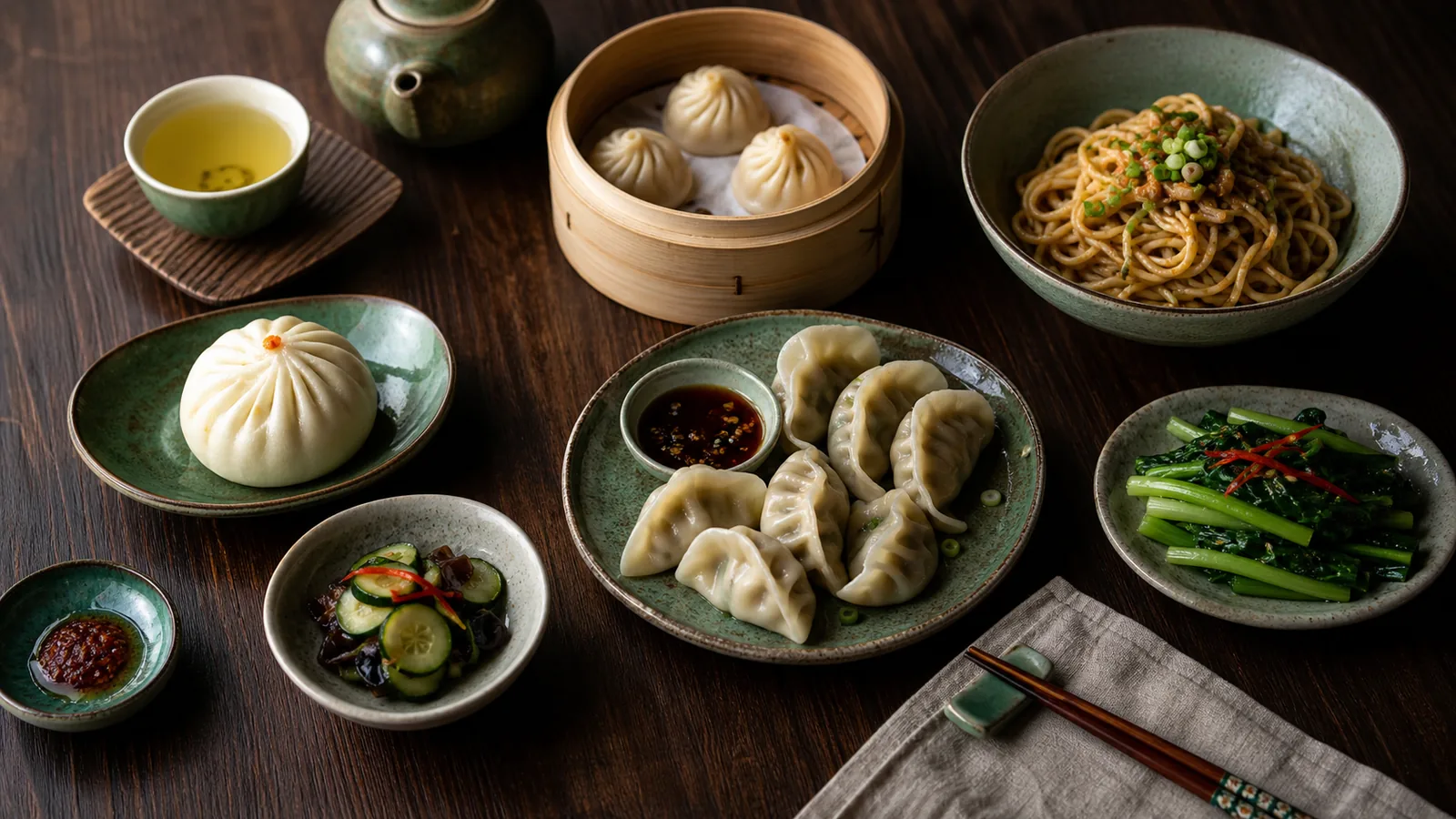
Chinese food is so much more than the takeout you get at home. A trip to China means discovering flavors you never knew existed — and we're not just talking about the famous ones.
This guide covers the must-try dishes, how to order without speaking Chinese, street food safety, and regional food differences so you eat like a traveler who actually knows what they're doing.
💡 Quick tip: Chinese cuisine varies dramatically by region. Sichuan food is spicy, Cantonese is mild and fresh, and Northern Chinese food is wheat-based (noodles, dumplings) rather than rice.
10 Must-Try Chinese Dishes
1. 饺子 (Jiǎozi) — Dumplings
The ultimate Chinese comfort food. These boiled, steamed, or pan-fried pockets are stuffed with pork, vegetables, or seafood.
- Where to try: Beijing, Xi'an, any northern city
- How to eat: Dip in black vinegar with a little chili oil. Don't cut them — bite in!
- Pro tip: Look for restaurants where you can watch them being hand-folded. Fresh > frozen every time.
2. 北京烤鸭 (Běijīng Kǎoyā) — Peking Duck
The dish that put Chinese cuisine on the global map. Crispy skin, tender meat, wrapped in a thin pancake with scallions and sweet bean sauce.
- Where to try: Beijing (Quanjude, Da Dong, Siji Minfu)
- Price: ¥128-298 per duck (serves 2-3)
- Pro tip: Siji Minfu is the best value — great quality without the tourist markup. Book ahead.
3. 火锅 (Huǒguō) — Hotpot
A DIY cooking experience and a meal in one. Boiling broth in the center of the table, raw ingredients on the side — you cook everything yourself.
- Where to try: Chongqing (the hotpot capital), Chengdu
- Spice level warning: Chongqing hotpot is extremely spicy. Ask for 鸳鸯锅 (yuānyáng guō) — half spicy, half mild broth.
- What to order: Thinly sliced beef, mushrooms, tofu, noodles, leafy greens
4. 小笼包 (Xiǎolóngbāo) — Soup Dumplings
Delicate steamed dumplings from Shanghai, filled with pork and hot broth. Bite carefully — the soup inside is scalding.
- Where to try: Shanghai (Nanxiang Steamed Bun Restaurant, Din Tai Fung)
- How to eat: Place on spoon, bite a small hole, slurp the soup, then eat the rest
- Pro tip: Practice the "bite-and-sip" technique. Beginners burn their mouths every time.
5. 兰州拉面 (Lánzhōu Lāmiàn) — Hand-Pulled Noodles
Fresh noodles pulled to order in front of you, served in a rich beef broth with radish and cilantro.
- Where to try: Lanzhou (origin), but every city has Lanzhou-style noodle shops
- Price: ¥12-20 per bowl — incredible value
- Pro tip: These shops are usually run by Muslim Hui people. Halal, clean, and delicious.
6. 川菜 — Sichuan Cuisine (Mapo Tofu, Kung Pao Chicken)
If you like spice, Sichuan food is your paradise. The numbing sensation from 花椒 (Sichuan peppercorn) is unlike anything in Western cuisine.
- Where to try: Chengdu, Chongqing
- Must-try dishes: 麻婆豆腐 (Mapo Tofu), 宫保鸡丁 (Kung Pao Chicken), 水煮鱼 (Sichuan Boiled Fish)
- Spice warning: "微辣" (mild) in Sichuan still means spicy. Be honest about your tolerance.
7. 煎饼果子 (Jiānbǐng Guǒzi) — Chinese Crepe
The ultimate Chinese street breakfast. A crispy crepe filled with egg, scallions, crispy fried dough, and sweet bean sauce.
- Where to try: Street stalls across China (best in Tianjin and Beijing)
- Price: ¥5-10 — probably the best $1.50 meal of your life
- When: Morning only. Stalls usually close by 10 AM.
8. 点心 (Diǎnxīn) — Dim Sum
Cantonese small-plate dining at its finest. Steamed, fried, and baked bite-sized portions served in bamboo baskets.
- Where to try: Guangzhou, Hong Kong, or upscale Cantonese restaurants nationwide
- Must-try: 虾饺 (shrimp dumplings), 叉烧包 (BBQ pork buns), 蛋挞 (egg tarts)
- Pro tip: Dim sum is traditionally a weekend brunch thing. Go between 10 AM - 2 PM.
9. 炸酱面 (Zhájiàngmiàn) — Beijing Noodles
Thick wheat noodles topped with a savory fermented soybean paste, fresh vegetables, and sometimes pork. Beijing's answer to pasta.
- Where to try: Beijing (Haiwanju, Lao Beijing Zhajiangmian)
- Price: ¥15-30
- Pro tip: Mix everything thoroughly before eating. The sauce needs to coat every noodle.
10. 月饼 (Yuèbǐng) — Mooncakes (Seasonal)
Dense, sweet pastries eaten during the Mid-Autumn Festival (September). Filled with lotus seed paste, red bean, or salted egg yolk.
- When: September (Mid-Autumn Festival)
- Where: Bakeries nationwide
- Note: Modern mooncakes come in wild flavors — ice cream, chocolate, even crayfish. Stick to traditional for your first time.
Regional Food Map
China's cuisine is traditionally divided into Eight Great Cuisines, but for travelers, these four regional styles matter most:
| Region | Flavor | Signature Dish | City to Visit |
|---|---|---|---|
| Northern | Salty, wheat-based | Dumplings, noodles | Beijing, Xi'an |
| Sichuan | Spicy, numbing | Mapo Tofu, Hotpot | Chengdu, Chongqing |
| Cantonese | Mild, fresh, sweet | Dim Sum, Roast Duck | Guangzhou, Shenzhen |
| Eastern | Sweet, delicate | Soup dumplings, fish | Shanghai, Hangzhou |
If you're visiting multiple cities, make it a point to try the local specialty wherever you go. Our Shanghai travel guide and Xi'an travel guide both have food recommendations built in.
How to Order Food Without Speaking Chinese
You don't need to be fluent to eat well in China. Here are the survival phrases:
| Chinese | Pinyin | English |
|---|---|---|
| 我要这个 | Wǒ yào zhège | I want this one |
| 不要辣 | Bú yào là | No spicy |
| 微辣 | Wēi là | Mild spicy |
| 买单 | Mǎi dān | Check, please |
| 好吃! | Hǎo chī! | Delicious! |
The Point-and-Smile Method
Most restaurants have picture menus or display dishes in glass cases. Point at what looks good, smile, and you'll be fine.
Using Translation Apps
Our guide on traveling China without Chinese covers the best translation apps — they work great for reading menus with your camera.
Dietary Restrictions
- Vegetarian: 素食 (sùshí) — but be warned, many "vegetable" dishes contain meat broth
- No pork: 不要猪肉 (bú yào zhūròu)
- Nut allergy: 我对花生过敏 (wǒ duì huāshēng guòmǐn) — I'm allergic to peanuts
- Halal: 清真 (qīngzhēn) — look for the green清真 sign
Street Food Safety
Street food is where the real magic happens in China. Here's how to enjoy it safely:
Safe Bets
- Food cooked in front of you (grilled skewers, crepes, fried noodles)
- High-turnover stalls (long line = fresh food)
- Boiled or steamed items (heat kills bacteria)
- Packaged snacks from convenience stores (7-Eleven, FamilyMart)
Be Careful With
- Cut fruit from street vendors (might be washed in tap water)
- Ice cubes in drinks (tap water ice)
- Raw vegetables that haven't been cooked
- Food that's been sitting out without heat
The Tap Water Rule
Never drink tap water in China. Bottled water costs ¥2-3 and is available everywhere. Ice in restaurants is usually made from filtered water, but when in doubt, skip it.
Eating Etiquette in China
A few quick tips to not look like a total tourist at the table:
- Don't stick chopsticks upright in rice — it resembles funeral incense
- Don't flip fish over — in coastal areas, it's considered bad luck (symbolizes a boat capsizing). Remove the backbone instead
- Slurping noodles is OK — it's actually a compliment to the chef
- Don't start before the host — wait for the oldest or most senior person to begin
- Leave a little food on your plate — finishing everything signals you're still hungry
Food Budget for China
How much should you budget for food in China? Here's a realistic breakdown:
| Meal Type | Budget | Mid-Range | High-End |
|---|---|---|---|
| Street food | ¥5-15 | — | — |
| Casual restaurant | ¥20-50 | — | — |
| Nice restaurant | — | ¥80-200 | — |
| Fine dining | — | — | ¥300-800 |
| Coffee/tea | ¥15-40 | — | — |
Daily food budget: ¥100-200 per person gets you three great meals.
For a complete budget breakdown including accommodation, transport, and activities, see our China travel cost guide.
FAQ
Is Chinese food really that different from American Chinese food?
Yes. What you get as "Chinese food" in the US is Americanized Cantonese cuisine. Real Chinese food is far more diverse, regional, and complex. General Tso's Chicken? That's an American invention.
Can I find Western food in China?
In major cities (Beijing, Shanghai, Guangzhou, Shenzhen), yes. But you'd be missing out — Chinese food is cheaper, fresher, and more interesting.
What's the strang thing a foreigner should try?
Century egg (皮蛋), chicken feet (凤爪), or stinky tofu (臭豆腐). All three sound worse than they taste. Stinky tofu is actually amazing — crispy outside, soft inside, with a kick of flavor.
Are restaurants in China clean?
Look for the A-rated hygiene certificate (green face) posted on the wall. A or B is good. C is... avoidable. Most tourist-area restaurants are clean.
Food is the single most memorable part of traveling in China. Don't play it safe — try the weird stuff, sit at the crowded stalls, and let your taste buds lead the way.
Planning a foodie trip to China? Start with our AI Trip Planner and we'll match you with local guides who know the best hidden food spots in every city.